pr. Kal. Sept.
August 31 in Ancient Rome
Caligula is born, and nobody agrees where
Born in a camp, or at the seaside?
politicsAD 12
Julian date · ≈ Aug 29 on our calendar
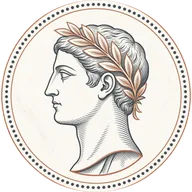
Suetonius dates the birth of Gaius “Caligula” to the day before the Kalends of September, AD 12, then weighs rival claims for his birthplace before settling on Antium.
In castris natus, patriis nutritus in armis, Iam designati principis omen erat.
Born in the camp, raised among his father’s arms, he was already an omen of a destined ruler.
Background
Gaius Caesar, later emperor and remembered by his childhood nickname Caligula, "little boot", was the son of the popular general Germanicus and Agrippina. Suetonius records that he was born on the day before the Kalends of September, while his father was consul together with Gaius Fonteius Capito per Suetonius.
Where he was born was already disputed in antiquity, and Suetonius enjoys the puzzle. Gnaeus Lentulus Gaetulicus wrote that he was born at Tibur. Pliny the Elder put his birth among the Treveri, in a village above Confluentes (Koblenz), and pointed to altars there inscribed "for Agrippina's childbirth". Verses that circulated when he became emperor said he was born in the army's winter camp: "Born in the camp, raised among his father's arms, he was already marked to rule." Suetonius rejects them all and says he found in the public records that Caligula was born at Antium per Suetonius.
The army-camp story suited the legend of a boy raised among soldiers, who dressed him in a miniature uniform and boots. The boy who charmed the legions grew into one of Rome's most notorious emperors, murdered by his own guards in AD 41.
Ancient source: Suetonius, Caligula 8 · Reference
Sources
☁ Rome today (1991–2020 avg): 28°/19°C (82°/66°F) · rain 22% of days
Rome in AugustThe hottest weeks raised the risk of fire in the dense city, especially in…
Fields & crops
Columella marks autumn beginning around 12 August; straw and stubble were gathered, figs and early fruit picked, and vineyards readied for the vintage per Columella 11.2.
Courts & law
A quieter legal month; many elite Romans were in the countryside. Under the empire, the imperial household's slaves and freedmen kept administration running.
Senate & politics
Renamed from Sextilis in 8 BC for Augustus, who had won his greatest successes in this month, including the capture of Alexandria in 30 BC per Macrobius 1.12.35.
Military
Armies stayed in the field; disease in hot camps was often as dangerous as battle modern view based on ancient accounts.
Festivals & religion
Portunalia (17 Aug.), Vinalia Rustica (19 Aug.), Consualia (21 Aug.), Vulcanalia (23 Aug.), when small fish were offered to Vulcan to ward off fire, and Opiconsivia (25 Aug.) per Varro and Festus. On the Ides, Diana's day, enslaved people had a holiday per Festus and Plutarch.
Daily life
The hottest weeks raised the risk of fire in the dense city, especially in timber-framed insulae; Augustus set up the vigiles, a fire brigade of freedmen, in AD 6 per Suetonius and Dio. Fevers peaked in late summer and early autumn; the sick poor relied on home remedies and shrines more than on doctors modern view.
Sources: Macrobius, Saturnalia 1.12 · Columella 11.2
All days in August →
LATIN LINE OF THE DAY
Ille sapit quisquis, Postume, vixit heri.
“The wise man, Postumus, is whoever lived yesterday.”
Martial, Epigrams 5.58 · translation ours (literal)