MEMENTO MORI · SERA NIMIS VITA EST CRASTINA VIVE HODIE · NON EST VIVERE SED VALERE VITA EST · HOMINEM PAGINA NOSTRA SAPIT · SVMMVM NEC METVAS DIEM NEC OPTES · HOC EST VIVERE BIS VITA POSSE PRIORE FRVI · MEMENTO MORI · QVOD SIS ESSE VELIS NIHILQVE MALIS · SPQR
During the persecution of Valerian, Bishop Sixtus II of Rome was put to death; the Roman calendar of 354 keeps his memory on 6 August.
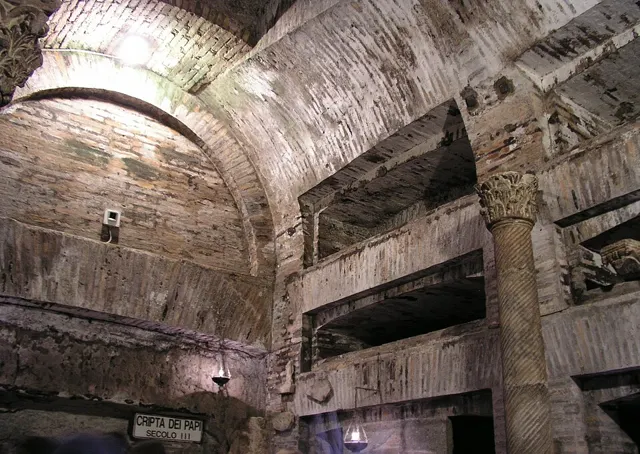
The Crypt of the Popes in the catacomb of Callixtus, where Sixtus II was buried. Dnalor 01, CC BY-SA 3.0
Background
Valerian's edict of 258 ordered bishops, priests and deacons to be executed at once. Sixtus (Xystus) was seized in a cemetery and killed with several of his deacons, two of whom, Agapitus and Felicissimus, the calendar names. The list of bishops in the same Chronography says he "passus est VIII id. Aug.".
He was buried in the papal crypt of the catacomb of Callixtus. His deacon Lawrence died a few days later, on 10 August.
Ancient source: Chronography of 354, Depositio martyrum (VIII id. Aug.) · Reference
☁ Rome today (1991–2020 avg): 32°/21°C (90°/70°F) · rain 13% of days
Rome in AugustThe hottest weeks raised the risk of fire in the dense city, especially in…
Fields & crops
Columella marks autumn beginning around 12 August; straw and stubble were gathered, figs and early fruit picked, and vineyards readied for the vintage per Columella 11.2.
Courts & law
A quieter legal month; many elite Romans were in the countryside. Under the empire, the imperial household's slaves and freedmen kept administration running.
Senate & politics
Renamed from Sextilis in 8 BC for Augustus, who had won his greatest successes in this month, including the capture of Alexandria in 30 BC per Macrobius 1.12.35.
Military
Armies stayed in the field; disease in hot camps was often as dangerous as battle modern view based on ancient accounts.
Festivals & religion
Portunalia (17 Aug.), Vinalia Rustica (19 Aug.), Consualia (21 Aug.), Vulcanalia (23 Aug.), when small fish were offered to Vulcan to ward off fire, and Opiconsivia (25 Aug.) per Varro and Festus. On the Ides, Diana's day, enslaved people had a holiday per Festus and Plutarch.
Daily life
The hottest weeks raised the risk of fire in the dense city, especially in timber-framed insulae; Augustus set up the vigiles, a fire brigade of freedmen, in AD 6 per Suetonius and Dio. Fevers peaked in late summer and early autumn; the sick poor relied on home remedies and shrines more than on doctors modern view.