a.d. XI Kal. Ian.
December 22 in Ancient Rome
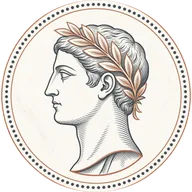
Diocletian's official birthday
birthc. AD 244
Julian date · ≈ Dec 22 on our calendar
Diocletian's birthday was officially kept on 22 December; his birth year is uncertain.
Diocletian
Background
Diocletian was born in Dalmatia, probably near Salona (by modern Split), to a family of humble status; some ancient writers say his father was a scribe or that he was the freedman of a senator per Eutropius and the Epitome; reports vary. His original name was Diocles.
His birthday was officially kept on 22 December per the Chronicon Paschale and other late sources. The year is uncertain: it is usually placed around 242–245, based on reports of his age at death disputed. Like other emperors, his birthday was a public festival with sacrifices, vows and sometimes gifts.
Diocletian's rise from a provincial family to emperor shows the path open to able soldiers in the third century, when the army, drawn heavily from the Danubian provinces, made and unmade emperors. After his abdication in 305 he lived in his fortified palace at Split, where he died around 311–312 the year of death is also disputed.
⚠ Uncertain date: Day official; year uncertain.
Ancient source: Chronicon Paschale; Lactantius · Reference
Sources
Read moreSaturnalia begins
Saturnalia begins
festivalAnnual
Roman calendar date
Rome's festival of Saturn began with a public banquet and the cry 'io Saturnalia'. It later stretched to 23 December.
Saturnalia
Background
The Saturnalia, honouring the old god Saturn, was Rome's most loved festival. It began on 17 December with a sacrifice at the temple of Saturn in the Forum, followed by a public banquet; the woollen bonds on the feet of Saturn's statue were loosened for the festival per Macrobius and Statius. Originally one day, it later stretched to several; Augustus set three days and Caligula added a fifth, and by the late empire it ran to 23 December per Macrobius 1.10.
During the festival, business and courts stopped, people swapped the toga for casual dress and the felt cap of freedmen (pilleus), gambled openly, and gave gifts: wax candles (cerei) and small pottery figurines (sigillaria). Catullus called it "the best of days" (14.15). Households let enslaved people eat with, or be served by, their owners, and speak freely per Macrobius, Accius quoted by him, and Seneca.
These reversals were real but temporary; the enslaved returned to their condition when the holiday ended. Seneca, writing in December, notes that the whole city seemed to go wild while he debated whether a wise man should join in per Seneca, Ep. 18. Many Saturnalia customs—feasting, gifts and candles—later fed into Christmas and New Year traditions modern view; the exact links are debated.
Ancient source: Catullus 14.15 ('Saturnalibus, optimo dierum') · Reference
Sources
☁ Rome today (1991–2020 avg): 12°/5°C (54°/41°F) · rain 32% of days
Rome in DecemberDecember's highlight was the Saturnalia (from 17 December).
Fields & crops
Olive picking and pressing, wood-cutting, and indoor work on rainy days; sowing ideally finished by the Kalends per Columella 11.2.
Courts & law
Courts closed for the Saturnalia; quaestors gave gladiatorial shows in December in late antiquity per the Chronography of 354.
Senate & politics
New tribunes of the plebs entered office on 10 December; outgoing magistrates closed their accounts before the year ended Republic.
Military
Winter quarters. Soldiers too kept the Saturnalia, choosing a mock 'king' per the Acts of Dasius, a late and disputed martyr text.
Festivals & religion
Faunalia (5 Dec.), Agonalia and Septimontium (11 Dec.), Consualia (15 Dec.), Saturnalia (from 17 Dec.), Opalia (19 Dec.), Divalia (21 Dec.), Larentalia (23 Dec.), and later the birthday of Sol Invictus (25 Dec.).
Daily life
December's highlight was the Saturnalia (from 17 December). Business stopped, people wore the casual pilleus cap and gave small gifts, and households let enslaved people eat with, or even be served by, their owners per Macrobius 1.7, Seneca Ep. 47. Seneca, though, notes that the inversion lasted only days; the rest of the year enslaved people stood silent and hungry while masters dined, and could be beaten for a cough per Seneca, Ep. 47. Seneca himself grumbled that the whole city "sweats" with feasting Seneca, Ep. 18.
On farms, olives were picked and pressed, and enslaved workers repaired tools and baskets on rainy days per Columella 11.2.
Sources: Varro, De Lingua Latina 6 · Chronography of 354 · Seneca, Epistles 18 and 47 · Macrobius, Saturnalia 1.7–10
All days in December →
LATIN LINE OF THE DAY
Non est vivere, sed valere vita est.
“Life is not just being alive, but being well.”
Martial, Epigrams 6.70 · translation ours (literal)